Springer Nature
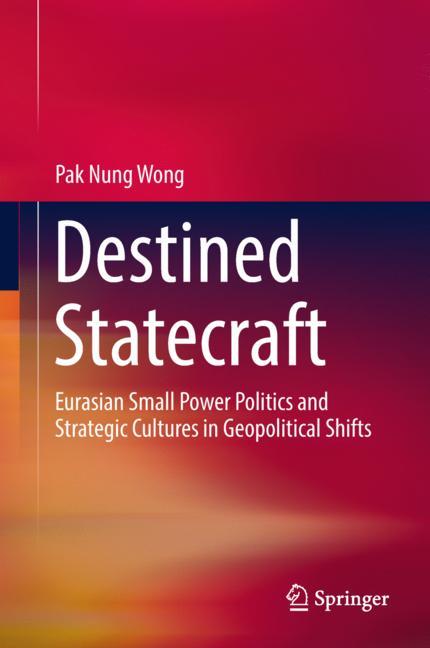
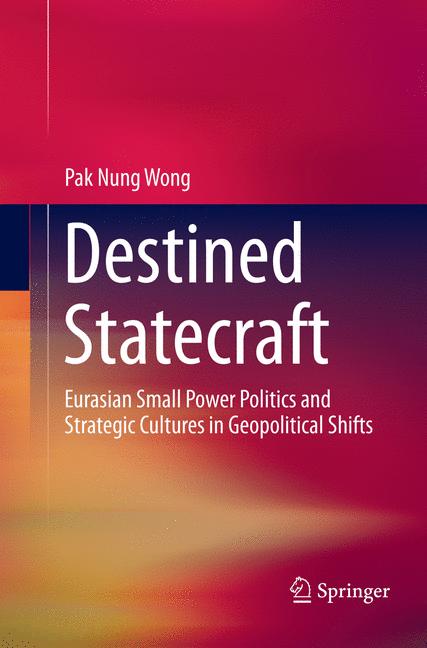
Destined Statecraft
Miglior prezzo disponibile
109,00$
Springer Nature · Spedizione gratuita
VISAPayPal
Prezzi aggiornati
Specifiche
MarcaSpringer Nature
CondizioneNuovo
Descrizione
âDestined Statecraft enriches our understanding of global affairs by presenting a perspective where small powers are no longer in the periphery, but take up the main narrative. This standpoint is all the more valuable in an age where the proactive decision-making of small powers often goes unobser ved. Professor Wongâs Destined Statecraft offers a fresh lens for discerning world issues, helping to extend the readerâs vision beyond the exterior towards a greater perception of the world we live in.â âMr Sungnam Lim, Vice-Minister of Ministry of Foreign Affairs, Republic of Korea This book considers the post-2010 strategic shifts in the Anglo-American geopolitical approach to Asia as a pivotal new strategy in the U.S. geo- strategic containment plan, which has been reformed to rebalance the rise of China and the Eurasian heartland in the course of the two decades since the disintegration of the Soviet Union in the early 1990s. At this critical global-historicaljuncture, the Peopleâs Republic of China has also devised a new counter-containment endeavor â the âOne Belt One Roadâ initiative, which aims to re-connect it with all the countries on the Eurasian landmass, forming a single community. Against this backdrop of the intensifying geopolitical and geo-economic competition between the U.S. and China, this book calls for the revival and reinvigoration of selected Eurasian small powersâ embedded geopolitical, political-economic and strategic-cultural structures. Drawing on Pierre Bourdieuâs notion of habitus, the book argues that these self- changing and unceasingly structuring structures do not only constrain and limit, but also enable and galvanize small powersâ strategists and policy- makers to proactively generate creative means-and-ends calculations, conduct prudent security assessments, and devise measured and responsive strategic deployments. In this context, the book proposes that the small powers return to their own religious, cultural and intellectual roots. It also argues for the need to rediscover their own strategic cultures as an essential means of re-inventing and implementing their own unique models of national development. As a substantial contribution to the subfields of small power politics and strategic cultures in international relations, the book marks a paradigm shift in both theory and practice. Exploring historical case studies from such diverse African, Asian and European powers as the Philippines, Liberia, Myanmar, India, Nepal, Sri Lanka, Bangladesh, Pakistan, Thailand, Germany, Japan, Indonesia, Russia, the European Union, Ukraine, Poland and the United Kingdom as well as China, the book presents engaging dialogues with a wealth of classical and contemporary Western and non-Western strategic thinkers, including: Thucydides, Sun Tzu, Halford Mackinder, Kautilya, King Solomon, Li Zongwu, King Bhumibol Adulyadej, Karl Haushofer, Carl Schmitt and the Malayo-Polynesian datu, as well as John Mearsheimer. In light of the post- 2017 U.S. âAmerica Firstâ foreign policy agenda, this book represents an essential guide for small powersâ strategists, foreign policy-makers, security practitioners and national development planners â introducing them to a broader spectrum of strategic options that will help them not just survive, but thrive in the constantly shifting geopolitical currents of our time.
Storico prezzi
Ricevi una notifica se il prezzo scende
Ti invieremo un'email quando il prezzo di questo prodotto diminuirà.
- Aggiornamenti dei prezzi in tempo reale
- Oltre 50 negozi monitorati
- Avvisi gratuiti di calo prezzo
- Solo negozi verificati
Avvisami quando il prezzo scende sotto: 109,00$
Prodotti simili
Una selezione di prodotti che potrebbero interessarti. Guarda tutti