Springer Nature
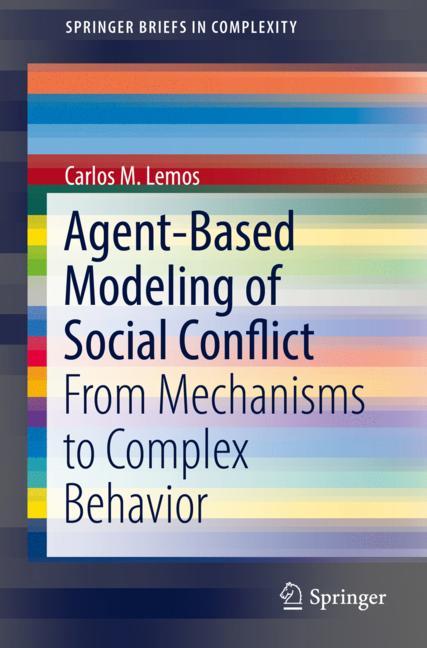
Agent-Based Modeling Of Social Conflict
Miglior prezzo disponibile
54,99$
Springer Nature · Spedizione gratuita
VISAPayPal
Prezzi aggiornati
Specifiche
MarcaSpringer Nature
CondizioneNuovo
Descrizione
This Brief revisits and extends Epsteinâs classical agent-based model of civil violence by considering important mechanisms suggested by social conflict theories. Among them are: relative deprivation as generator of hardship, generalized vanishing of the risk perception (âmassive fear lossâ) when the uprisings surpass a certain threshold, endogenous legitimacy feedback, and network influence effects represented by the mechanism of dispositional contagion. The model is explored in a set of computer experiments designed to provide insight on how mechanisms lead to increased complexity of the solutions. The results of the simulations are compared with statistical analyses of estimated size, duration and recurrence of large demonstrations and riots for eight African countries affected by the âArab Spring,â based on the Social Conflict Analysis Database. It is shown that the extensions to Epsteinâs model proposed herein lead to increased âgenerative capacityâof the agent-based model (i.e. a richer set of meaningful qualitative behaviors) as well the identification of key mechanisms and associated parameters with tipping points. The use of quantitative information (international indicators and statistical analyses of conflict events) allows the assessment of the plausibility of input parameter values and simulated results, and thus a better understanding of the modelâs strengths and limitations. The contributions of the present work for understanding how mechanisms of large scale conflict lead to complex behavior include a new form of the estimated arrest probability, a simple representation of political vs economic deprivation with a parameter which controls the `sensitivity' to value, endogenous legitimacy feedback, and the effect of network influences (due to small groups and âactivistsâ). In addition, the analysis of the Social Conflict Analysis Database provided a quantitative description of the impact of the âArab Springâ in several countries focused on complexity issues such as peaceful vs violent, spontaneous vs organized, and patterns of size, duration and recurrence of conflict events in this recent and important large-scale conflict process. This book will appeal to students and researchers working in these computational social science subfields.
Storico prezzi
Ricevi una notifica se il prezzo scende
Ti invieremo un'email quando il prezzo di questo prodotto diminuirà.
- Aggiornamenti dei prezzi in tempo reale
- Oltre 50 negozi monitorati
- Avvisi gratuiti di calo prezzo
- Solo negozi verificati
Avvisami quando il prezzo scende sotto: 54,99$
Prodotti simili
Una selezione di prodotti che potrebbero interessarti. Guarda tutti
 Agent-Based Modeling Of Social Conflict
39,99$
Agent-Based Modeling Of Social Conflict
39,99$
 Agent-Based Modeling Of Sustainable Behaviors
119,99$
Agent-Based Modeling Of Sustainable Behaviors
119,99$
 Agent-Based Modeling
99,99$
Agent-Based Modeling
99,99$
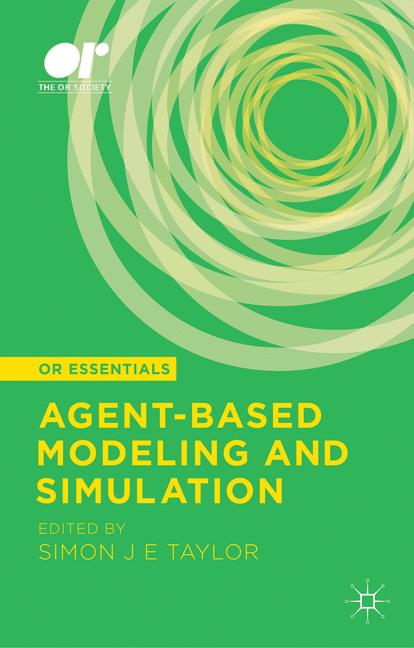 Agent-Based Modeling And Simulation
109,99$
Agent-Based Modeling And Simulation
109,99$
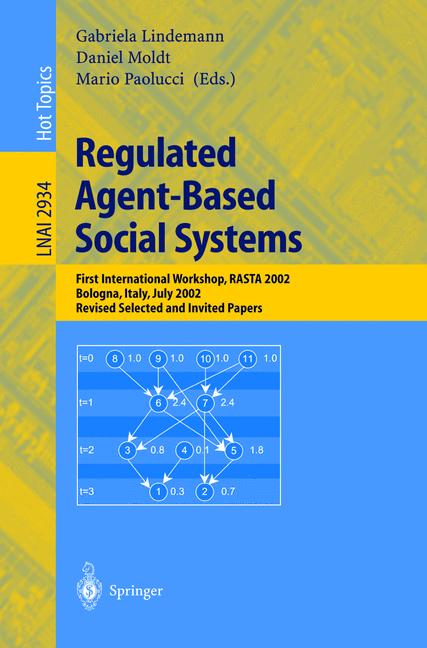 Regulated Agent-Based Social Systems
54,99$
Regulated Agent-Based Social Systems
54,99$
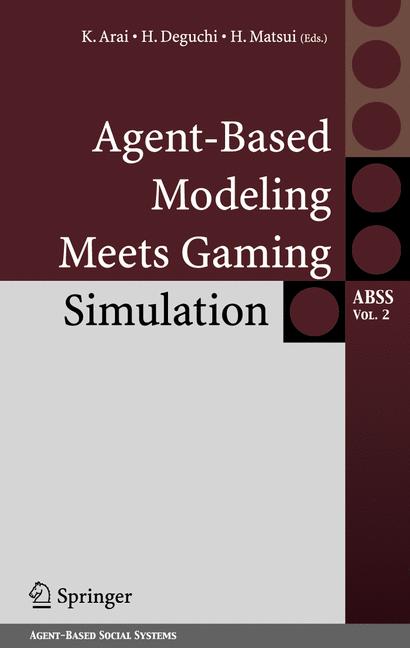 Agent-Based Modeling Meets Gaming Simulation
109,99$
Agent-Based Modeling Meets Gaming Simulation
109,99$
 Agent-Based Modeling And Simulation In Archaeology
109,99$
Agent-Based Modeling And Simulation In Archaeology
109,99$
 Meeting The Challenge Of Social Problems Via Agent-Based Simulation
54,99$
Meeting The Challenge Of Social Problems Via Agent-Based Simulation
54,99$