Springer Nature
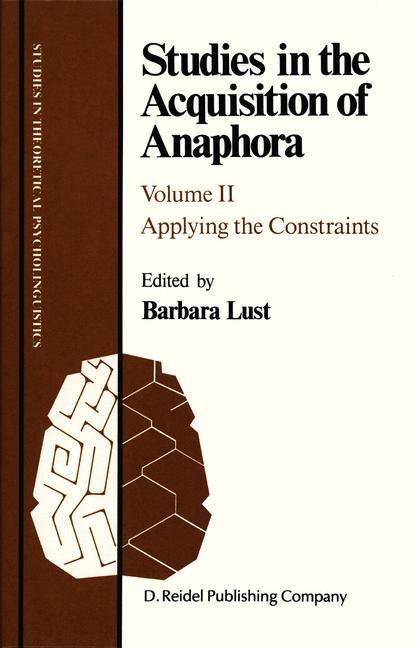
Studies In The Acquisition Of Anaphora
Miglior prezzo disponibile
213,99€
Springer Nature · Spedizione gratuita
VISAPayPal
Prezzi aggiornati
Specifiche
MarcaSpringer Nature
CondizioneNuovo
Descrizione
Today, one fundamental set of issues confronts both the linguistic theory of 'Universal Grammar' and the psychological study of human cognition. These issues concern the question of to what degree and how the human mind is "programmed," presumably biologically, to acquire the complex knowiedge of human language. As discussed in Volume I, anaphora has been critical to this study because, while a critical property of language knowledge, it is largely underdetermined by available evidence. While most previous research projects have generally addressed these issues through either linguistic analyses or psychological analyses of language data, and have concerned themselves with either the role of innateness or the role of experience in language knowledge, this volume, with its predecessor, attempts to combine these approaches; in fact to develop a research paradigm for their joint study. While Volume I emphasized study of the content and nature of the initial state, i. e. , of the language faculty, this second volume emphasizes study of the way in which experience does or does not interact with this language faculty to determine language acquisition. We argue in the introduction that the issues addressed in Volume II are appreciable, if not necessary, com plements to those addressed in Volume I. This is not only because a more comprehensive model of language acquisition requires so, but because valid definition of the content of 'the initial state' may require so.
Storico prezzi
Ricevi una notifica se il prezzo scende
Ti invieremo un'email quando il prezzo di questo prodotto diminuirà.
- Aggiornamenti dei prezzi in tempo reale
- Oltre 50 negozi monitorati
- Avvisi gratuiti di calo prezzo
- Solo negozi verificati
Avvisami quando il prezzo scende sotto: 213,99€
Prodotti simili
Una selezione di prodotti che potrebbero interessarti. Guarda tutti
 Studies In The History Of The Law Of Nations
53,49€
Studies In The History Of The Law Of Nations
53,49€
 Studies In The Economics Of Uncertainty
106,99€
Studies In The Economics Of Uncertainty
106,99€
 Studies In The Philosophy Of Kierkegaard
53,49€
Studies In The Philosophy Of Kierkegaard
53,49€
 Vocabulary Studies In First And Second Language Acquisition
93,08€
Vocabulary Studies In First And Second Language Acquisition
93,08€
 Studies In The Sociology Of Population
106,99€
Studies In The Sociology Of Population
106,99€
 The Political Economy Of Land Acquisition In India
160,49€
The Political Economy Of Land Acquisition In India
160,49€
 The Handbook Of Advanced Proficiency In Second Language Acquisition
189,99€
The Handbook Of Advanced Proficiency In Second Language Acquisition
189,99€
 French Studies In The Philosophy Of Science
160,49€
French Studies In The Philosophy Of Science
160,49€